Highlights from Microscopy & Microanalysis 2025: Our Vision for Automated Discovery

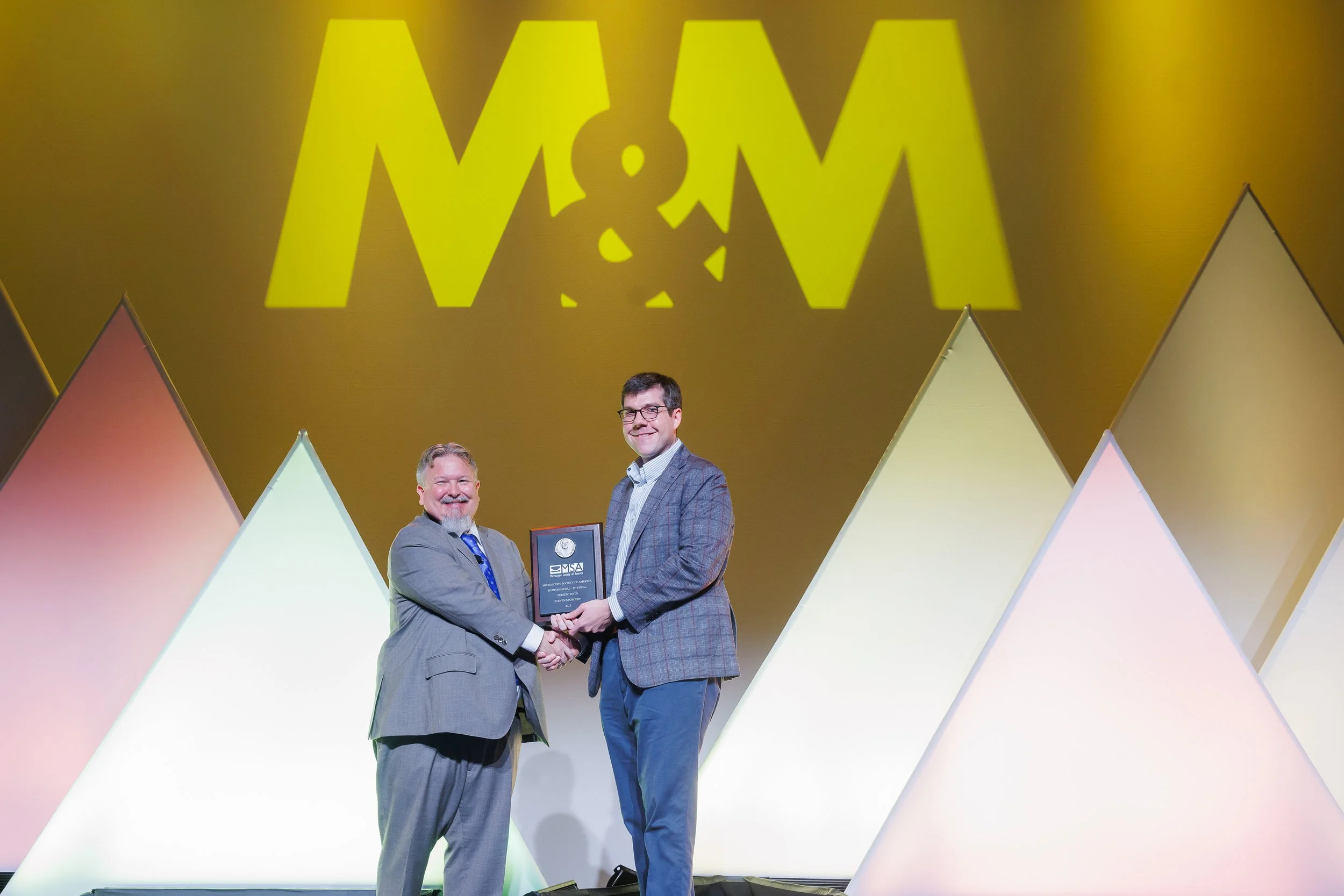
Our team has just returned from a stimulating and successful week at the Microscopy & Microanalysis (M&M) 2025 conference! It was a fantastic opportunity to connect with colleagues and share our group's latest research focused on building the future of autonomous materials science. The week was capped off by a wonderful achievement for our team, and we're thrilled to share the highlights.
Grace Guinan Wins First Place Poster Award
We are incredibly proud to announce that intern Grace Guinan received a First Place Poster Award for her outstanding presentation.
Her poster, titled "Describing Point Defect Topology in 2D Energy Materials Through Computer Vision," was a collaborative effort with Michelle Smeaton and Babak Anasori’s group at Purdue. The work details a novel approach using computer vision to automatically identify and classify point defects in 2D materials like MXenes. Understanding these atomic-scale imperfections is critical for engineering more durable and efficient materials for energy applications. This award is a well-deserved recognition of Grace's insightful and impactful research at such an early stage in her career!
A Unified Vision for Automated Discovery
Beyond the award-winning poster, our team presented a unified vision of our group's cohesive efforts to accelerate discovery through automation. Two other presentations highlighted our progress in creating robust, intelligent experimental workflows:
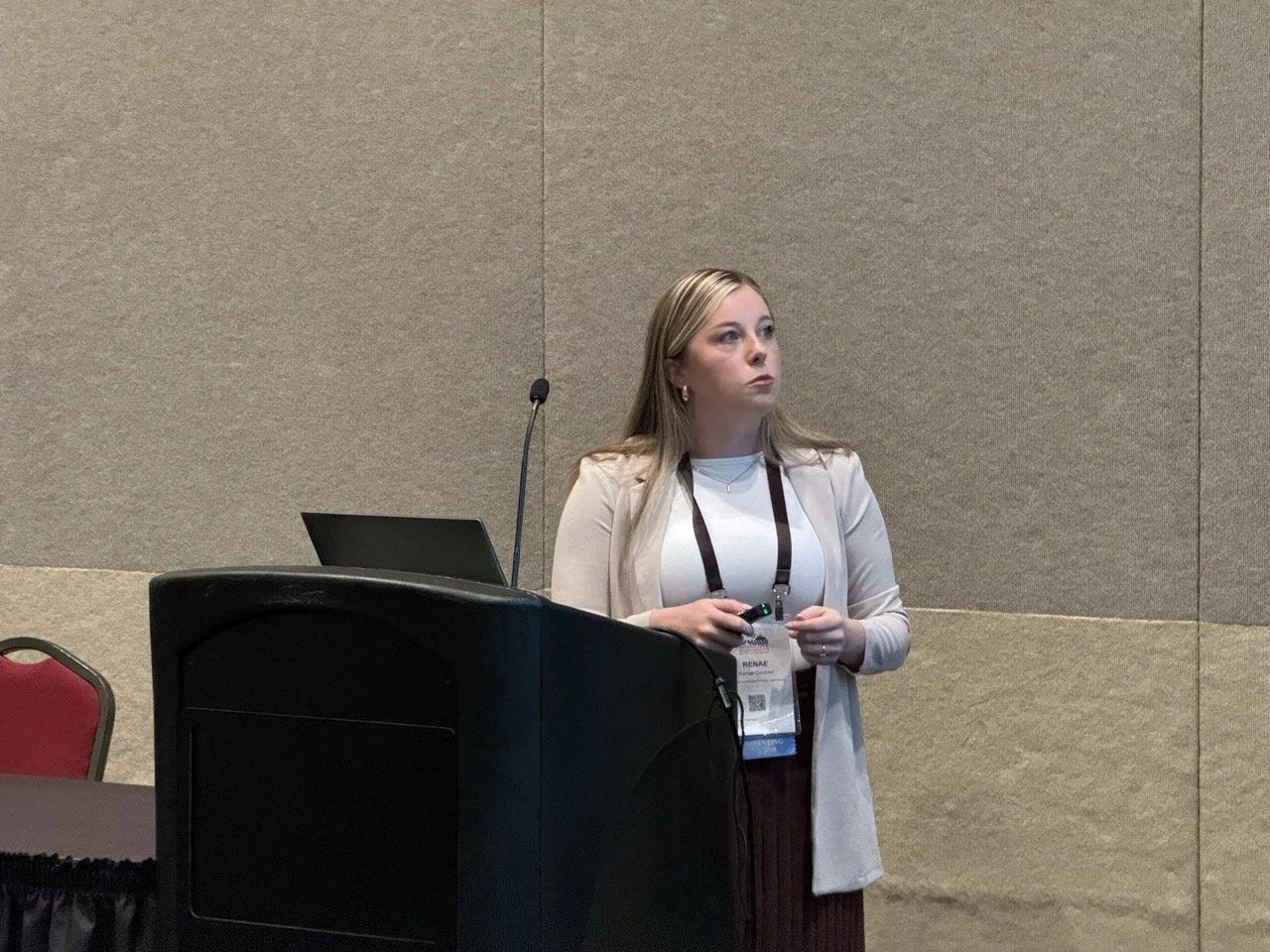
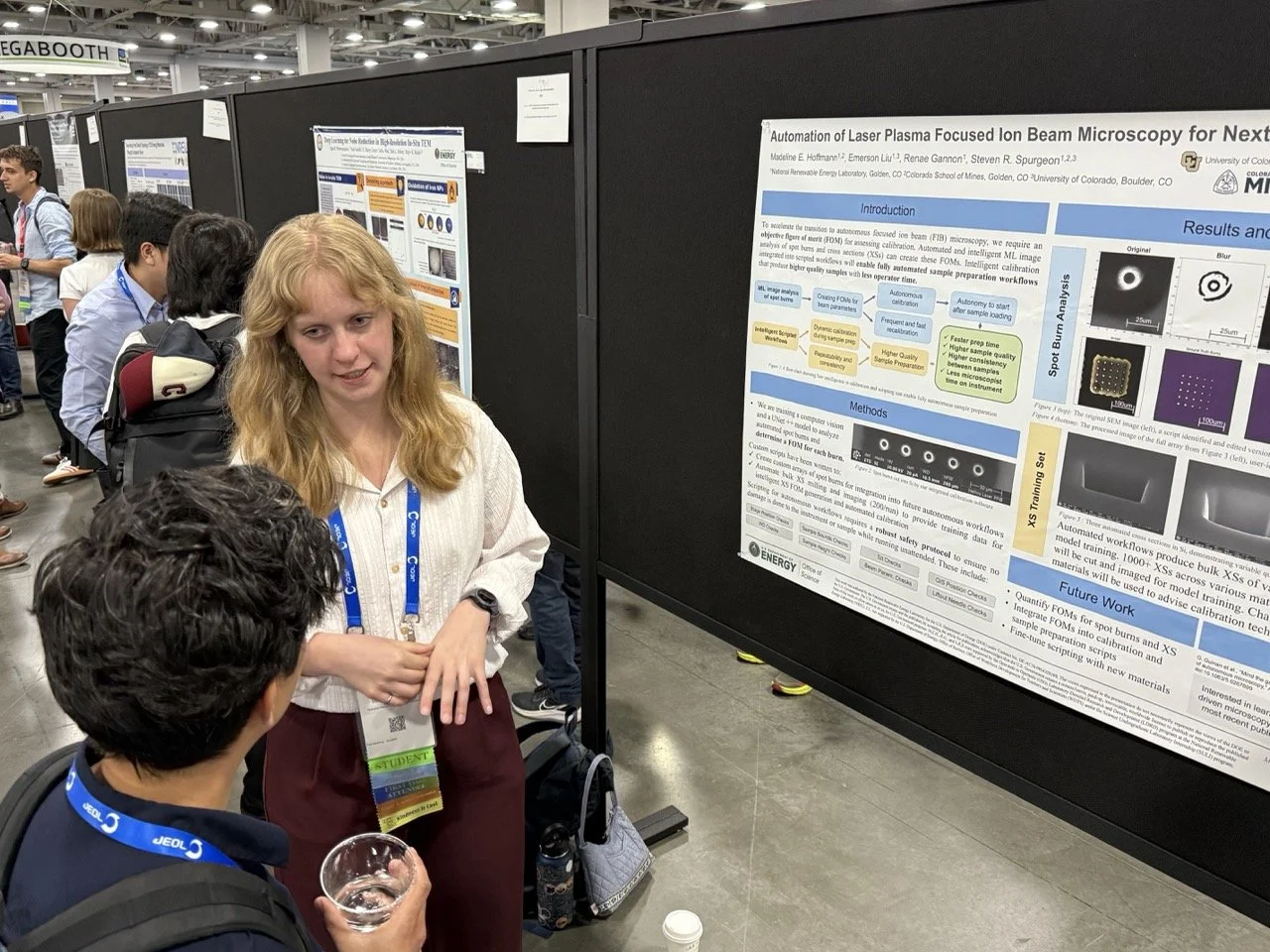
Automation of Laser Plasma Focused Ion Beam (PFIB) Microscopy: Led by student Madeline E. Hoffmann and staff Renae Gannon, this work focuses on automating a highly complex instrument. By developing methods for self-calibration and intelligent operation, the team is making strides toward creating reliable, hands-off characterization tools essential for high-throughput materials science.
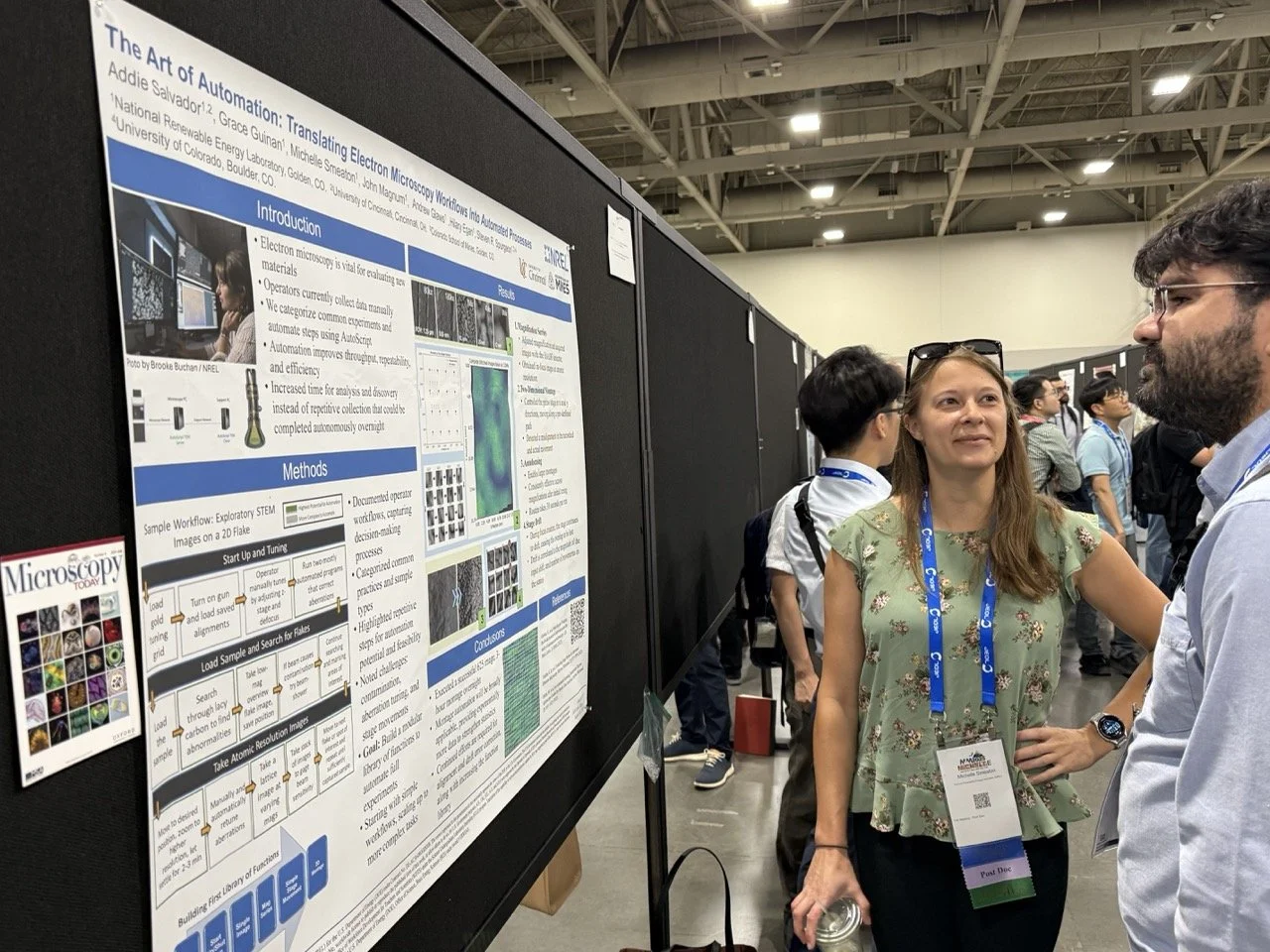
The Art and Science of Microscopy: Work by Addison Salvador, presented by Michelle Smeaton, this poster addressed the challenge of translating the nuanced skill of a human expert into robust, automated processes. By codifying operator workflows, this research directly tackles one of the key barriers to accelerating discovery, enabling microscopes to perform complex experiments intelligently on their own.
Looking Ahead
Taken together, these projects demonstrate our group's integrated approach to autonomous science. From fundamental defect analysis in 2D materials to the automation of advanced instrumentation and the codification of expert knowledge, our team is building a comprehensive ecosystem for the future of materials research.
We are immensely proud of the creativity, dedication, and collaborative spirit shown by our students, interns, and postdocs. A sincere thank you to our collaborators and the support from NREL and Mines that makes this work possible. We left the conference inspired and are excited to build on this momentum!