The TIME Research Group at M&M 2026
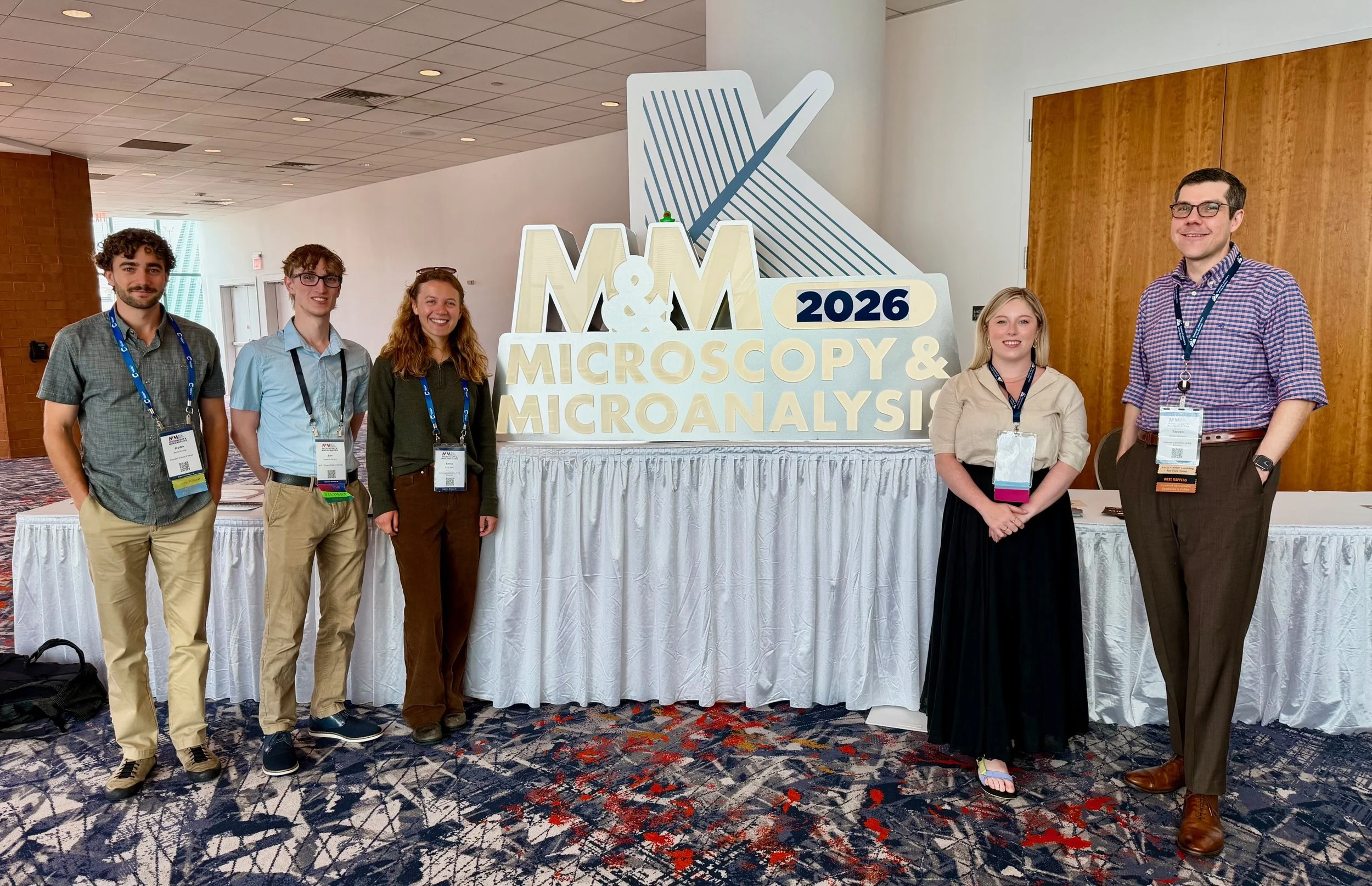
Microscopy and Microanalysis 2026 was a strong showing for the TIME Research Group. Across four posters and three talks in Milwaukee, our team presented work spanning autonomous electron microscopy, agentic AI, computer vision, and materials processing — a collective argument for what the next generation of scientific infrastructure looks like in practice.
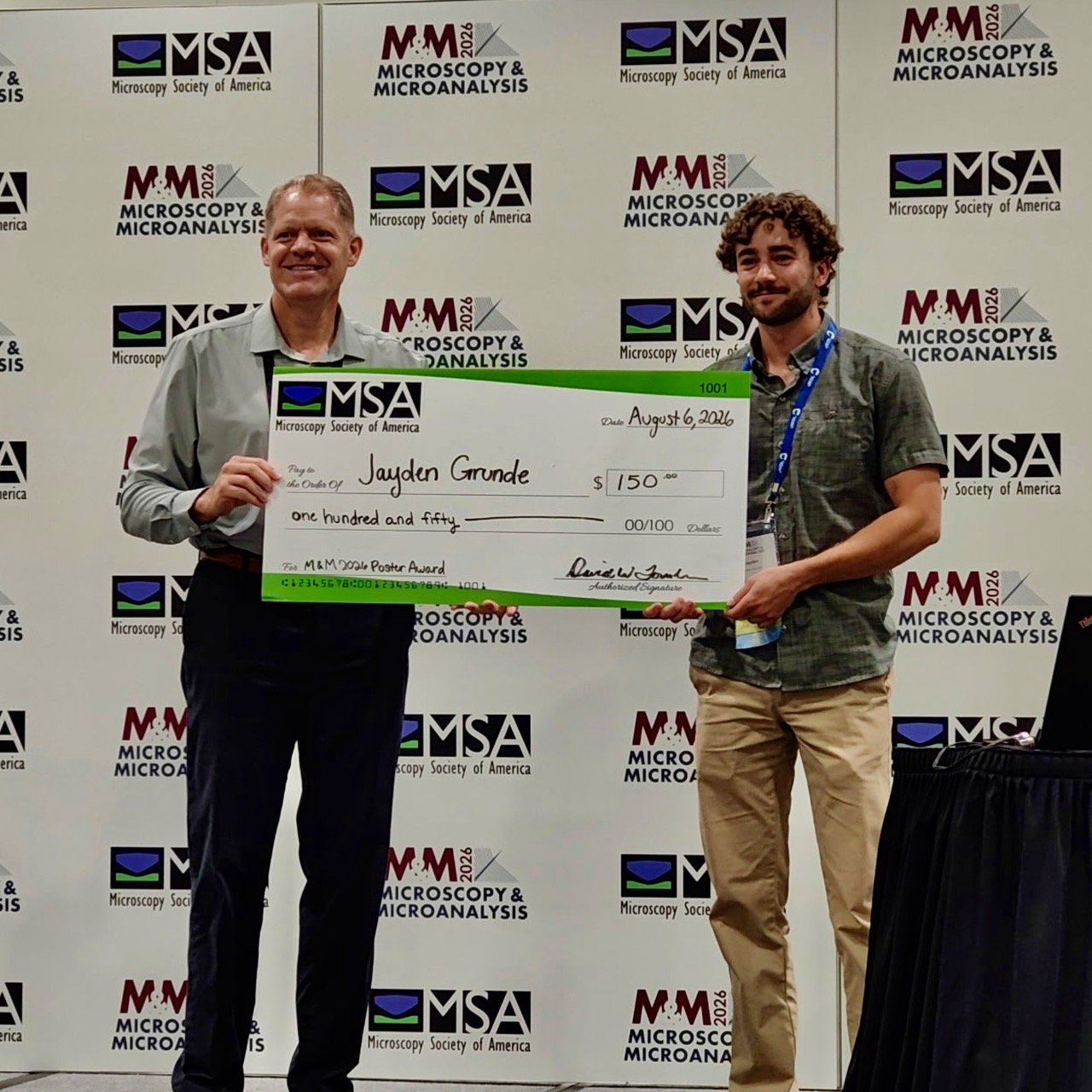
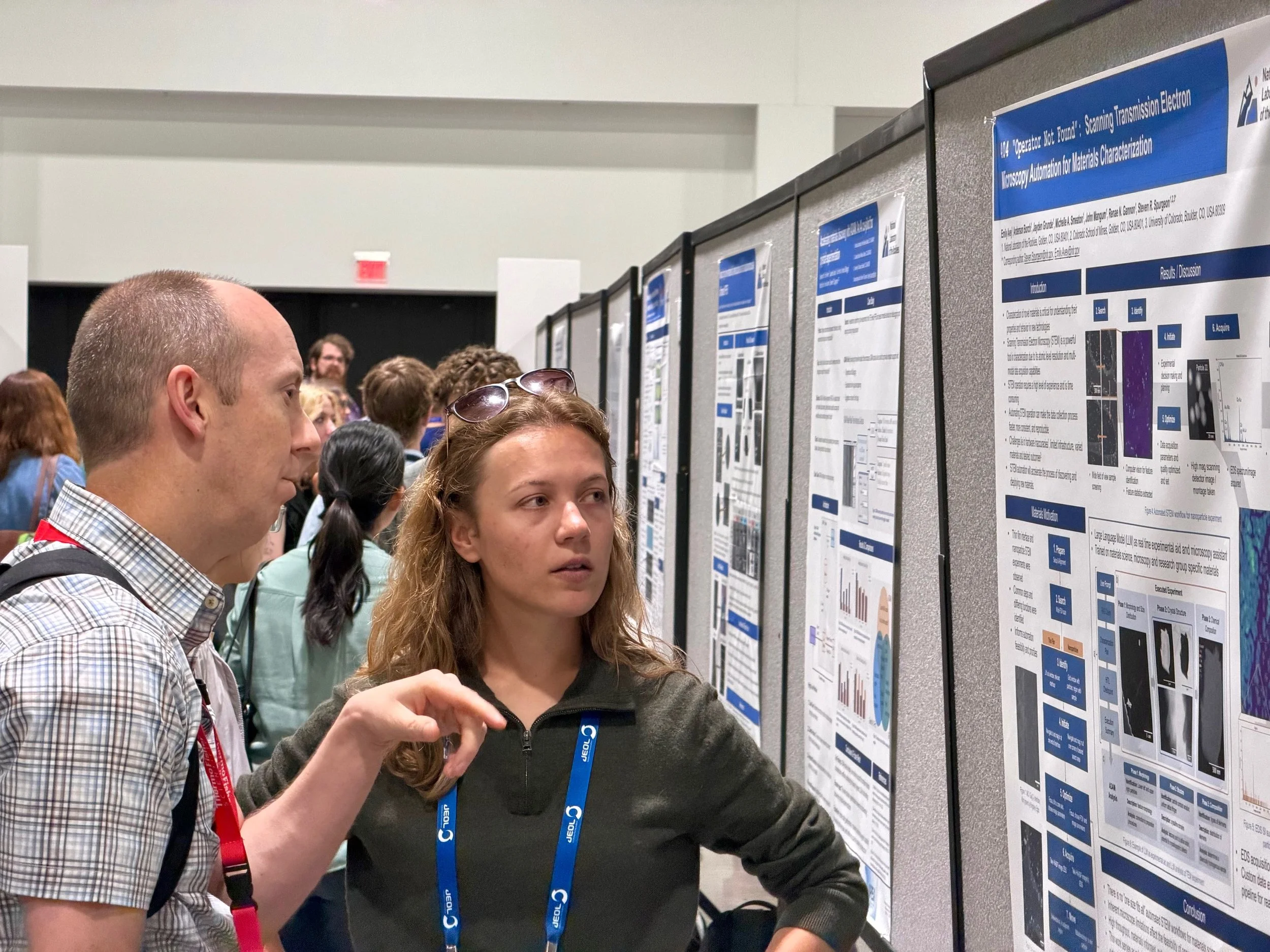
On the exhibit floor, Emily Avey presented our latest advances in autonomous multi-modal STEM data acquisition, building the adaptive routines that allow instruments to respond dynamically to changing sample conditions without manual intervention. Andy Borch's ADAM framework, a domain-agnostic LLM co-pilot for intelligent experiment planning and instrument control, drew strong interest as a concrete answer to what an AI-augmented researcher actually looks like. Jayden Grunde showed how agentic workflows can close the loop on plasma focused ion beam calibration and processing, work that earned him second place in the M&M poster competition. Ben Wyland rounded out the poster session with AMPS, a convolutional neural network pipeline for real-time microscopic particle segmentation aimed at battery feedstock characterization at scale.
On the talk side, Michelle Smeaton presented atomic-resolution STEM analysis of NiO/Ga₂O₃ heterojunctions, quantifying interface structure and stability across substrate orientations in support of our APEX Energy Frontier Research Center work on power electronics materials. Renae Gannon showed how real-time LLM-driven optimization is accelerating autonomous workflows on the PFIB, from ion implantation to nanomachining campaigns. My own talk, "From Observation to Orchestration," laid out the strategic vision for AM³, the Autonomous Multi-Modal Characterization and Processing platform that ties all of this work into a single, instrument-agnostic architecture for autonomous materials science.
Congratulations to the entire team on a productive and well-received week!